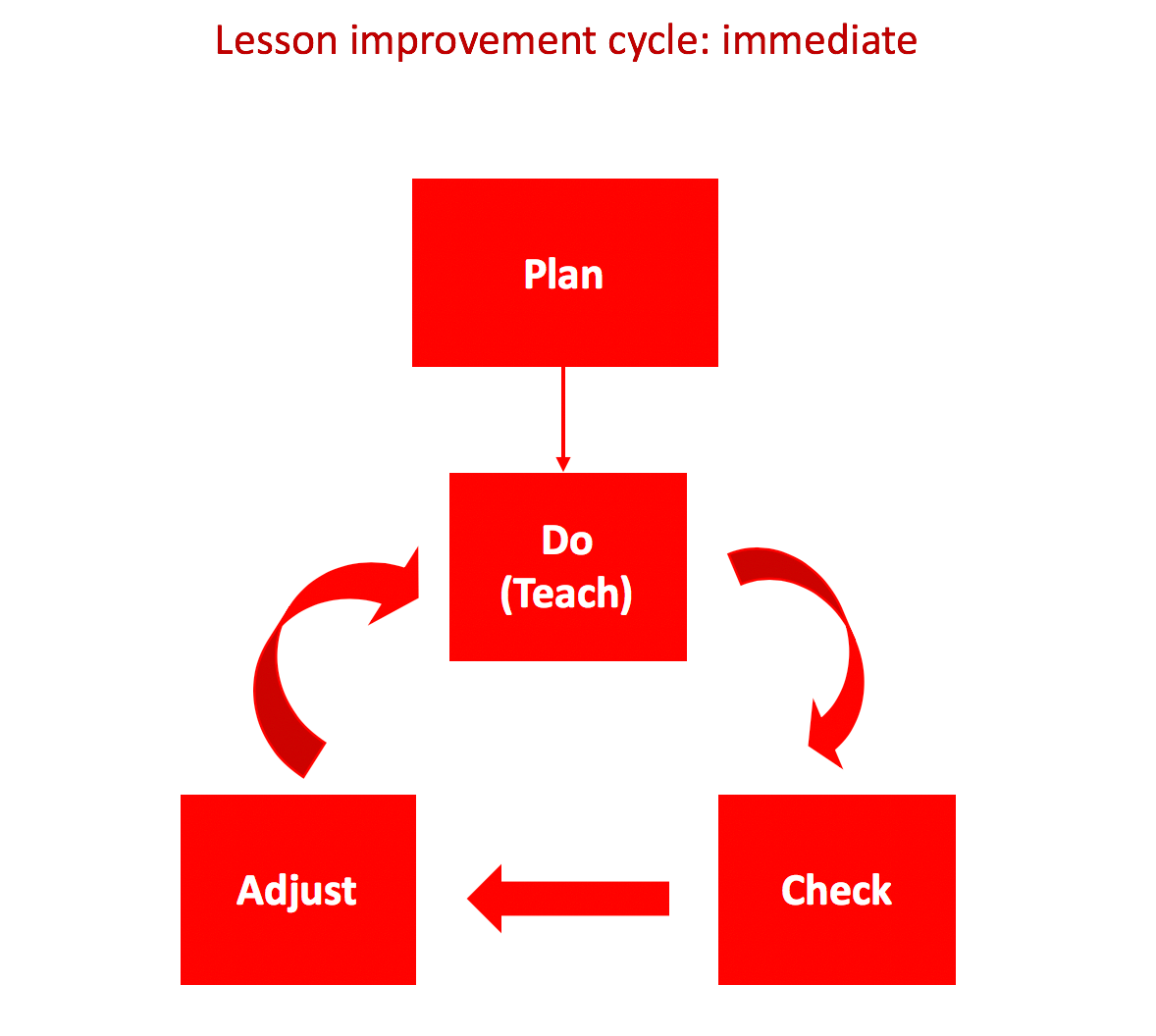
The Shewhart Cycle is a method used in business to continually improve processes and products. It consists of four steps: Plan, Do, Check, Adjust. This is a concept at the heart of the collaborative teaching model in my department.
The collaborative planning model shared in my first blog post details the collaborative planning cycle in more detail from start to finish over the course of a half term, but I want to zoom in on the teaching (Do), the learning (Check) and the immediate changes (Adjust) that can be made to improve learning on a day-to-day basis.
A cognitive load problem / Do Check Adjust
I identified a weakness in one of my lessons this week. Pupils found it tricky to connect the dots between two related concepts. On paper (Plan) this looked fine. In practice (Do) it didn’t work so well.
Part of the problem was cognitive load; understanding the basics of Cognitive Load Theory has helped me to make sense of this.
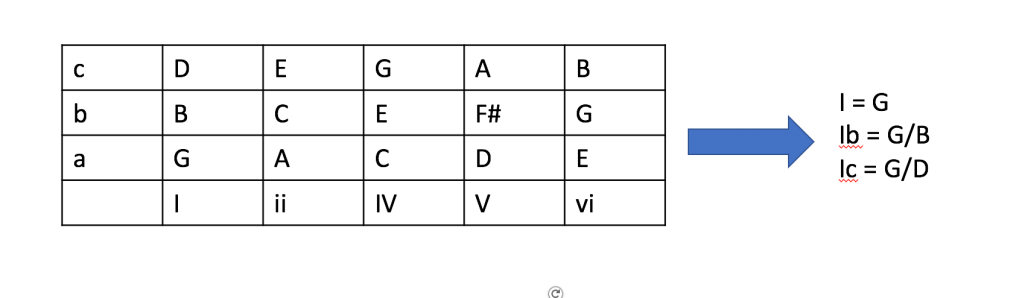
We had just got to grips with and practised chord labelling using Roman numerals. Fine – pupils managed to complete the task. My questioning and the practice exercises suggested that they had got it. I am confident they understood this part.
The next part of the lesson was looking at how these chords could be represented in a different format (letter names instead of Roman numerals) and then how we write the inversions differently…
They did not get it
At least not until a lot more explanation and modelling had been provided.
This is because working out the chords using the chord grid was still using up a good deal of space in their working memories and adding an extra although related concept to this meant that working memories were overloaded; they were having to battle with the way their brains process and store new information in order to complete the task.
They all completed the work I had set by the end of the lesson but I was not confident of their understanding – they had to ask a lot of questions during the process.
Did they learn anything? Yes, but the instructional design was not optimal. It was not enough that they completed the task, this was not evidence they had all fully understood.
The problem here? Too many new concepts introduced over the course of a lesson. Although the two concepts are related, and in my brain there is a logic about going from one to the other, making this leap is taxing when the first two concepts are still so new and pupils hadn’t practised recalling and using this knowledge. I can make the leap, this information is firmly stored in my own schema, my pupils could not. This is a great illustration of the way cognitive load theory can help us make sense of pupil learning and inform our teaching (even if we don’t always get it right first time).
The great part about this experience?
I know how to make it better next time (Adjust)
What could be even better than that?
This is the type of information we record and share as part of our department collaborative planning and teaching; I know my colleagues will use it to improve the learning experience for all of our pupils. It also helps to illustrate and embed teaching and learning concepts across my team which will help to improve their own practice and have a much wider impact impact.
The best thing about this self-reflection is that I get to share this with the rest of my department thanks to our culture of collaborative planning and teaching which puts the pupils’ learning experience at the heart of the process, enabling us to create the best possible learning environment for all of our pupils.
PDCA is part of the immediate lesson improvement cycle. In addition, a longer term examination of summative assessment data is used to implement improvements to the teaching and learning process.
 Victoria Hughes Ed